May is the most labor-intensive month in vegetable gardening. The spring vegetables need to be harvested, and the summer vegetables can finally be planted.
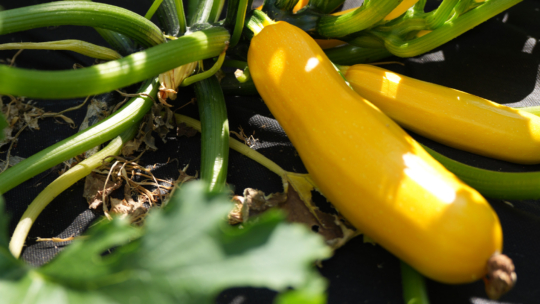
Over the past few weeks, we’ve been able to reap a bountiful harvest from the plastic tunnel and the raised beds. We harvested crisp, fresh pea pods, lettuces, a wide variety of herbs, and the first kohlrabi, fennel, and carrots. Now the first beds have already been harvested, making room for the summer vegetables. We’ve planted about 20 different varieties of tomatoes, 3 different varieties of cucumbers, 5 different varieties of zucchini, as well as a few chrysanthemums (edible cut flowers). The tomatoes and cucumbers are tied up with string and wire and pruned. This makes harvesting easier and helps prevent diseases like powdery mildew. To strengthen the plants, we added horn shavings to the planting holes and applied rock dust to the beds. We’re now gradually mulching the beds with grass clippings.
At the same time, we’ve planted a cover crop consisting of field beans and peas on the plot that we won’t need until fall for radicchio. These two legumes are beneficial and important for soil improvement, and they also bloom beautifully. Through a symbiotic relationship with nodule-forming soil bacteria—also known as rhizobia—that colonize the plant roots, legumes can fix nitrogen in the soil and store it for subsequent crops.